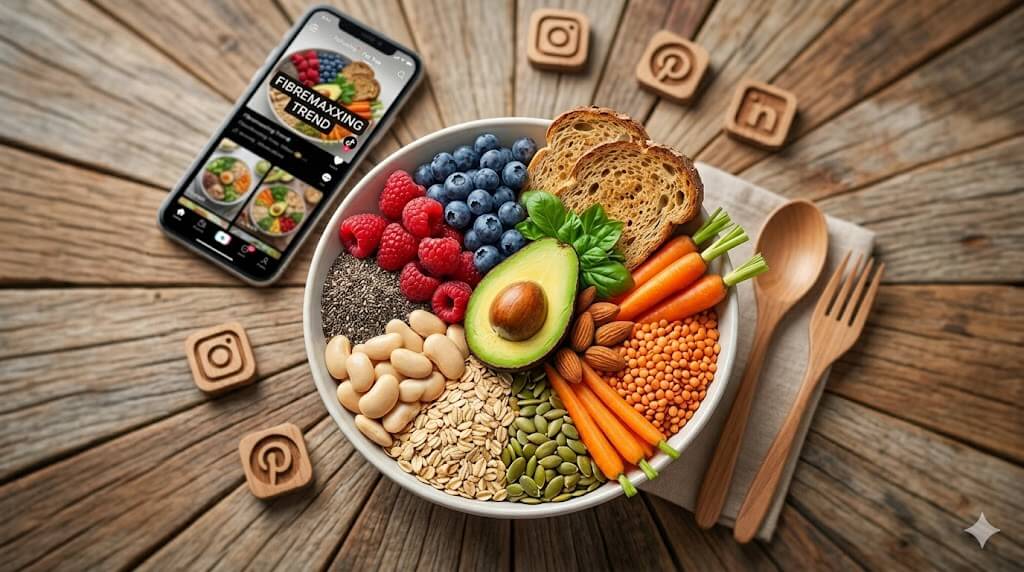
If you have spent any time on wellness social media recently, you have likely seen creators trade in their protein shakers for giant bowls of butter beans, chia-seeded overnight oats,and high-fibre veggie burgers. Those of us whose FYPs are a world of wellness have probably not been able to miss this latest social media health trend. This is known as "Fibremaxxing", the latest internet "maxxing" trend (optimising one specific area of your life to the absolute limit) that has completely overtaken the gut health space.
But unlike dangerous viral fads that tell you to eat only raw meat or dry-scoop pre-workout powders, "fibremaxxing" is turning heads for a completely different reason. In this case, leading UK dieticians and gastroenterologists actually agree with it.
So let's take a little look at what Fibremaxxing actually is, what's involved and what the real benefits are... according to the science and the science only.
What is Fibremaxxing?
Fibremaxxing is a viral health movement where individuals intentionally build their daily meals around high-fibre, plant-based foods. The core objective is to consistently meet or slightly exceed optimal daily fibre targets (typically 30 grams per day in the UK) by focusing on dietary abundance and plant diversity rather than restrictive dieting.
Instead of counting calories or obsessing over macros, "fibremaxxers" focus entirely on counting grams of fibre and racking up "plant points"—strategically adding seeds, legumes, nuts, and diverse whole grains to every single plate.
Is Fibremaxxing Scientifically Backed?
Yes. In fact, it is arguably the most scientifically sound trend on social media.
The UK is currently facing a massive, chronic fibre deficit. The NHS recommends that adults consume 30g of fibre per day, yet national diet and nutrition surveys reveal that nine out of ten UK adults fall woefully short, averaging just 18g to 20g daily.
When you increase your plant intake, you are backing your body with decades of clinical data:
The Lancet Meta-Analysis: A landmark study published in The Lancet reviewed forty years of data and confirmed that individuals with the highest dietary fibre intake saw a 15% to 30% reduction in all cause mortality, cardiovascular disease, type 2 diabetes and bowel cancer.
The Microbiome Mechanism: Human enzymes cannot break down dietary fibre. It travels entirely intact to the large intestine, where it acts as a premium fuel source for your gut microbiome. Your gut bacteria ferment this fibre, producing vital compounds called Short-Chain Fatty Acids (SCFAs), such as butyrate. SCFAs are proven to repair the gut lining, lower systemic inflammation, and directly communicate with the brain to help regulate mood and appetite.
What are the Benefits of Fibremaxxing?
When done correctly, maximizing your daily fibre intake fundamentally upgrades your systemic health across four primary pillars:
Metabolic and Blood Sugar Stability: Soluble fibre forms a thick, gel-like substance in your digestive tract. This naturally slows down the absorption of carbohydrates, eliminating the sharp insulin spikes and subsequent energy crashes that drive afternoon fatigue.
Natural Satiety and Weight Management: High-fibre foods physically expand in the stomach, triggering stretch receptors that signal fullness to your brain. Furthermore, the production of SCFAs in the colon stimulates the natural release of satiety hormones like GLP-1.
Lower Cholesterol and Heart Health: Soluble fibre binds to cholesterol-rich bile acids in your small intestine and safely escorts them out of the body. This forces your liver to pull LDL (“bad”) cholesterol out of your bloodstream to create new bile, lowering your circulating cholesterol levels naturally.
Bowel Regularity without Lazy Gut: Insoluble fibre acts like a natural broom for your intestines, adding bulk to stool and pulling in water to keep things moving smoothly without the chemical dependency created by over-the-counter laxatives.
The Natural Alternative: Replacing OTC Medications
Personally, I'm always looking for how whole food interventions can reduce my reliance on synthetic, over-the-counter (OTC) pharmacy fixes. Fibremaxxing acts as a direct, natural alternative to several common medicines
| Condition / Symptom | Common Over-the-Counter Fix | The Natural Fibremaxxing Alternative |
|---|---|---|
| Chronic Sluggishness & Constipation | Laxatives (e.g., Senna, Laxido, Movicol) |
Insoluble Fibre + Hydration: Adds physical bulk and moisture to the colon, naturally stimulating peristalsis (muscle contractions) without irritating the gut lining or creating bowel dependency. |
| Mildly Elevated Cholesterol | Low-dose Statins or Supplements | Oat Beta-Glucans & Psyllium: Form a physical trap for dietary and biliary cholesterol in the gut, sweeping it safely away before it can be reabsorbed into the bloodstream. |
| Blood Sugar Spikes & Sugar Cravings | Glucose Control Supplements | Soluble Fibre Barrier: Viscous fibres create a structural matrix in the digestive tract, naturally slowing down carbohydrate absorption and flattening your glucose curves. |
Is Fibremaxxing Safe? (The “Gut Shock” Warning)
While the core principles are excellent, the word “maxxing” carries a distinct danger. If your body is accustomed to a standard Western diet of 15g of fibre a day, and you suddenly consume 45g of fibre tomorrow because of a TikTok video, you will shock your digestive system.
Your gut microbiome is like a muscle. In other words, it needs conditioning. Flooding an unconditioned gut with excessive complex carbohydrates results in “Gut Shock,” which can cause severe bloating, nasty and painful trapped wind, intense cramping and actually even, severe constipation. Furthermore, pushing consistently past 50g to 70g of fibre per day can begin to bind to essential minerals like iron, zinc, and calcium, preventing your body from absorbing them.
How to Do Fibremaxxing The Right Way
To unlock the full potential health benefits of fibremaxxing without the painful stomach related side effects, you need to avoid the temptation to change your diet overnight. Instead, use this systematic, slow and steady approach to condition your gut safely:
Establish Your Actual Baseline
Track your normal dietary fibre intake for three consecutive days using a standard nutrition app. Do not consciously modify how you eat just yet. Here, you need to simply calculate the total daily grams of fibre to identify your true starting point.
Implement the 5-Gram Incremental Rule
Increase your daily intake target by a maximum of 5g of fibre per week. For example, if your baseline is 15g, target 20g daily in week one, 25g in week two, and hit your 30g NHS target by week three. This gradual ramp-up gives your microbial populations adequate time to multiply and safely adapt.
Prioritise Plant Diversity over Single Sources
Don't just dump large spoonfuls of raw wheat bran or synthetic fibre powders into your meals. Aim for 30 distinct "plant points" each week across diverse whole vegetables, fruits, legumes, nuts, and seeds. Different bacterial strains thrive on different chemical shapes of fibre, constructing a highly resilient microbiome.
Match Your Hydration to Your Fibre Intake
Fibre acts exactly like a completely dry sponge in your digestive tract. For every additional 5g of fibre you introduce to your plate, you must drink an extra glass of water throughout the day. Without explicit hydration, increased fibre will stall and cause an intestinal traffic jam.
High-Fibre Swaps at the UK Supermarket
Fibremaxxing does not require expensive, highly processed “protein-style” fibre bars that are often packed with artificial sweeteners and gut-irritating chicory root (inulin). You can easily hit your targets using simple, budget-friendly whole foods found at any local Tesco, Sainsbury’s, or Aldi.
Swap White Toast for 2 slices of seeded wholemeal sourdough topped with half a smashed avocado (+12g fibre).
Swap Cornflakes for traditional rolled oats cooked with a tablespoon of chia seeds and a handful of raspberries (+14g fibre).
Swap White Rice in your evening curry or stew for brown rice mixed with half a tin of green or brown lentils (+9g fibre).
Swap Crisps or Rice Cakes for a handful of raw almonds paired with pumpkin seeds or carrot sticks dipped in standard hummus (+5g fibre).